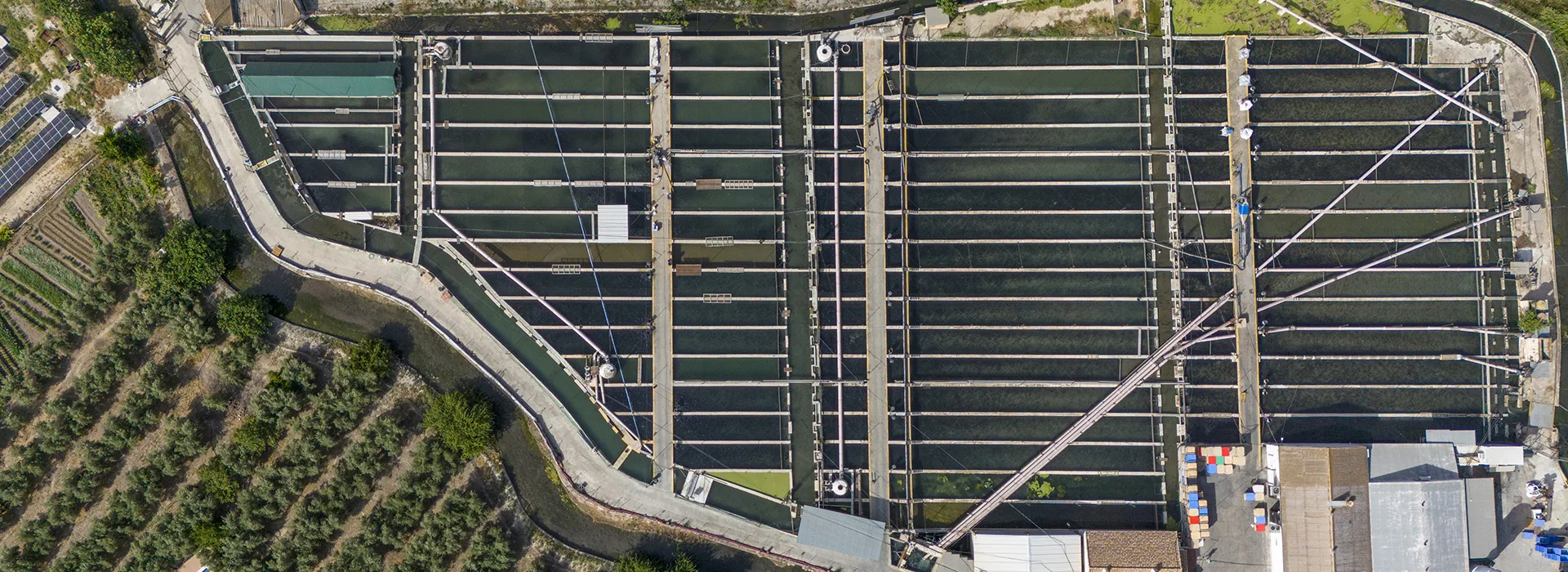
Advanced helium recovery and purification systems for industrial and scientific applications.

Helium has been a low price resource for many years leading to its inefficient utilization. Helium is now a scarce resource and its prices are increasing significantly.
Therefore, solutions for Helium recovery and purification are needed. Helium recovery alone is not the answer to this problem, as Helium purity decreases at each process cycle and needs to be released when minimum purity level is reached.
SYSADVANCE developed a Helium Purification System – HELISYS – using PSA technology.
These units allow to achieve high purities, high recovery rates, and huge savings in the costs associated with Helium usage.

Recovery rates of up to 98%, reducing helium consumption and operating cost
Stable helium purity at the required setpoint, even with changing inlet conditions.
Real-time removal of nitrogen, oxygen, moisture, argon, CO₂ and other contaminants.
Lower vacuum requirements reduce takt time and increase production throughput.
Dew point below −40°C, protecting sensitive components and test equipment.
Automatic operation based on inlet and outlet helium composition.
Suitable for pure helium and helium–nitrogen mixtures, with customizable purity levels.
Designed for seamless integration with new or existing helium recovery systems.
Choose your sector to see the applications where our technology is being used.
VPSA Technology
Contaminated Helium enters the HELISYS unit, where advanced VPSA technology removes impurities such as nitrogen, oxygen, argon, moisture, carbon dioxide, methane, oil and dust.
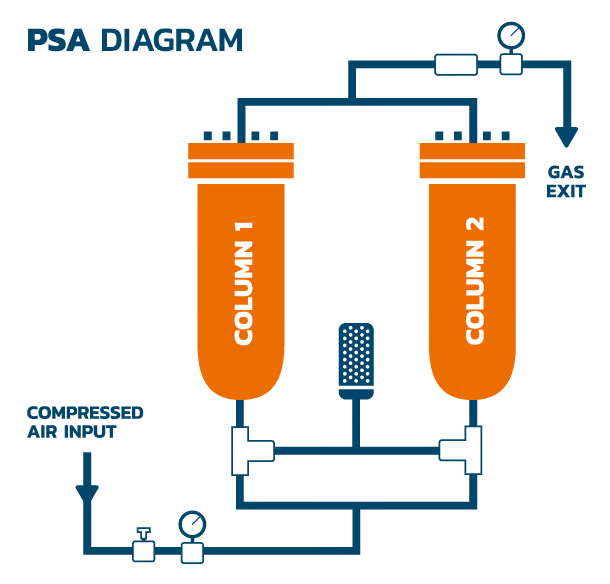
The system uses two or more columns filled with selective adsorbent material. While one column purifies the helium, the other regenerates under vacuum, ensuring a continuous flow of high-purity gas.
Residual Helium released during regeneration is recovered and returned to the process, helping achieve recovery rates of up to 98%. The fully automated system continuously monitors inlet and outlet gas composition to maintain stable purity and efficient operation.
Download our comprehensive brochure with detailed specifications, diagrams, and performance charts for our industrial gas generation systems.
Industrial Catalogue
Download BrochureHelium Catalogue
Download BrochureAn industrial PSA nitrogen generator produces Nitrogen (N₂) from compressed air using adsorption technology. Special adsorbent materials selectively retain oxygen, carbon dioxide, moisture, and other trace gases, allowing nitrogen to pass through at the required purity.
Talk to EngineerClean, dry compressed air enters adsorption vessels filled with adsorbent material. Under pressure, the adsorbent captures unwanted gases while nitrogen flows to the buffer tank. The vessels continuously alternate between adsorption and regeneration, ensuring an uninterrupted nitrogen supply.
Talk to EngineerPSA Nitrogen generators typically deliver purities ranging from 95% to 99.999%, covering applications from general inerting to highly oxygen-sensitive processes such as heat treatment, electronics manufacturing, and fine chemicals.
Higher or customised purity levels can be evaluated together with the Sysadvance engineering team.
Talk to EngineerFor virtually all small- and medium-scale applications—including continuous 24/7 operation, variable demand profiles, and fast start-up requirements—PSA technology offers lower capital investment, lower cost per cubic metre, and easier plant integration.
Cryogenic plants are generally reserved for very high flow rates or projects requiring the simultaneous production of multiple industrial gases.
Talk to EngineerProducing Nitrogen on-site eliminates recurring costs associated with cylinder filling, rental, transportation, delivery charges, and evaporation losses from cryogenic tanks.
It also gives manufacturers full control over their gas production costs while reducing dependence on external suppliers and logistics.
An additional benefit is a significant reduction in carbon emissions by minimising road transport and storage-related losses.
Talk to EngineerFor the vast majority of industrial applications, PSA systems provide higher energy efficiency, greater flexibility, and lower lifetime operating costs than membrane technology.
Talk to EngineerThe generator is supplied with clean, dry compressed air and is typically installed downstream of the existing compressor, air receiver, dryer, and filtration system, requiring minimal modifications to the plant's compressed air network.
Talk to EngineerNitrogen generators can be supplied as skid-mounted or containerised plug-and-play systems.
Outdoor installation is possible in most cases, provided that temperature limits, ventilation requirements, and maintenance access are properly considered.
Talk to EngineerMaintenance mainly focuses on the compressed air treatment system (filters, drains, and dryers), together with periodic inspection of valves and instrumentation.
With properly treated compressed air, the adsorbent can maintain its performance for many years.
Talk to EngineerA well-designed and properly maintained PSA nitrogen generator typically has a service life of 15–20 years or more.
Talk to EngineerSystems can include online oxygen analysers, data logging, and remote communication, allowing continuous monitoring of Nitrogen purity, flow rate, pressure, dew point, and other key operating parameters, with automatic alarms in case of deviations.
Talk to EngineerIndustrial Nitrogen case studies commonly show total gas cost reductions between 30% and 90%, depending on consumption profile, local gas prices, electricity costs, and the customer's starting point.
Payback periods of less than one to two years are frequently achieved.
Talk to EngineerNitrogen is used across almost every industrial sector—from food and beverage packaging to electronics manufacturing, metal processing, heat treatment, pharmaceuticals, chemicals, plastics, energy, and many other applications.
For a detailed overview, please visit our Applications section.
Talk to EngineerAn industrial PSA Oxygen generator produces oxygen (O₂) from compressed air using Pressure Swing Adsorption (PSA) technology. The adsorbent selectively retains Nitrogen while Oxygen passes through as the product gas.
Talk to EngineerFiltered and dried compressed air enters adsorption vessels containing molecular sieves. Nitrogen is adsorbed under pressure while Oxygen is delivered to the buffer tank. The vessels alternate automatically between adsorption and regeneration, ensuring a continuous Oxygen supply.
Talk to EngineerIndustrial PSA oxygen generators typically provide Oxygen purities between 90% and 95%, covering a wide range of industrial applications including wastewater treatment, glass production, metal cutting, combustion enhancement, aquaculture, and ozone generation.
Higher purity requirements should be evaluated on a case-by-case basis by the SYSADVANCE engineering team.
Talk to EngineerPSA technology is generally the most economical solution for low- and medium-capacity Oxygen demand, offering lower investment costs, reduced operating complexity, fast start-up, and excellent flexibility for varying production requirements.
Cryogenic plants remain the preferred solution for very large Oxygen consumption or multi-gas production facilities.
Talk to EngineerOn-site Oxygen production removes recurring delivery, rental, transportation, and storage costs while ensuring continuous gas availability.
It also reduces dependency on external suppliers and lowers the environmental impact associated with transporting industrial gases.
Talk to EngineerThe generator is installed downstream of the existing compressed air treatment system and integrates easily with standard industrial compressor installations.
Talk to EngineerPSA Oxygen generators are available as skid-mounted or containerised systems suitable for indoor or outdoor installation, provided environmental and maintenance requirements are respected.
Talk to EngineerRoutine maintenance mainly involves servicing the compressed air treatment equipment and periodically inspecting valves, analysers, and instrumentation.
With adequate air quality, the adsorbent provides reliable long-term performance.
Talk to EngineerA correctly sized and properly maintained PSA Oxygen generator commonly operates for 15–20 years or longer.
Talk to EngineerSystems can be equipped with online Oxygen analysers, pressure, flow, and dew point monitoring, data logging, remote diagnostics, and alarm management to ensure continuous performance verification.
Talk to EngineerIndustrial Oxygen users frequently achieve 30% to 90% reductions in total gas costs, depending on consumption patterns and local market conditions.
Many projects achieve return on investment within one to two years.
Talk to EngineerPSA Oxygen is widely used in wastewater treatment, glass manufacturing, metal fabrication, combustion enhancement, aquaculture, ozone generation, pulp and paper, mining, chemical processing, and numerous other industrial applications.
For more detailed information, please visit our Applications section.
Talk to EngineerAn industrial VSA (Vacuum Swing Adsorption) oxygen generator produces Oxygen (O₂) directly from ambient air using adsorption technology. Instead of relying on compressed air, VSA systems use low-pressure blowers and vacuum pumps to separate Oxygen from Nitrogen, delivering high-efficiency on-site Oxygen production.
Talk to EngineerAmbient air is drawn into the system by a blower and passes through adsorption vessels filled with molecular sieve. Nitrogen is selectively adsorbed while oxygen passes through to the product buffer tank. The adsorbent is then regenerated under vacuum before the cycle repeats, providing a continuous oxygen supply.
Talk to EngineerIndustrial VSA Oxygen generators typically produce Oxygen with purities between 90% and 95%, making them suitable for applications such as wastewater treatment, glass manufacturing, combustion enhancement, mining, aquaculture, pulp and paper, and chemical processing.
Higher purity requirements should be evaluated together with the SYSADVANCE engineering team.
Talk to EngineerVSA technology becomes particularly advantageous for higher oxygen flow rates, where it can significantly reduce energy consumption compared with PSA systems.
Because VSA operates at low pressure and regenerates the adsorbent under vacuum, it typically offers lower specific power consumption, especially in continuous large-scale industrial applications.
Talk to EngineerFor medium- to high-capacity oxygen demand, VSA often provides the lowest total cost of ownership, combining relatively low capital investment with low operating costs and rapid installation.
Cryogenic plants remain the preferred solution for very large Oxygen production capacities or when multiple industrial gases are required simultaneously.
Talk to EngineerProducing Oxygen on-site eliminates recurring costs associated with gas deliveries, cylinder rental, liquid oxygen storage, transportation, and supplier dependency.
It also improves supply security while reducing the carbon footprint associated with industrial gas logistics.
Talk to EngineerBoth technologies produce Oxygen on-site, but each has its strengths:
PSA is generally preferred for lower flow rates and where compressed air is already available.
VSA is typically the most energy-efficient solution for medium and high oxygen demands, thanks to its low-pressure operating principle.
The optimal choice depends on flow rate, purity, operating profile, available utilities, and overall project economics.
Talk to EngineerUnlike PSA systems, VSA generators do not require a compressed air system. Instead, they operate using low-pressure blowers, vacuum pumps, and filtration equipment, simplifying installation where compressed air capacity is limited.
Talk to EngineerVSA Oxygen generators are available as skid-mounted or containerised plug-and-play systems suitable for indoor or outdoor installation.
Adequate ventilation, ambient temperature control, and sufficient maintenance access should be considered during system design.
Talk to EngineerRoutine maintenance includes servicing the blower, vacuum pump, filters, valves, and instrumentation.
With proper preventive maintenance, the molecular sieve maintains stable performance for many years.
Talk to EngineerA correctly designed and maintained VSA Oxygen generator typically provides a service life of 15–20 years or more, with many installations operating reliably beyond this period.
Talk to EngineerVSA systems can incorporate online Oxygen analysers, flow meters, pressure transmitters, data logging, remote monitoring, and predictive maintenance features, allowing continuous supervision of system performance and automatic alarms if operating parameters deviate from specification.
Talk to EngineerCompared with purchased Oxygen, VSA installations frequently achieve 30% to 90% reductions in total gas costs, depending on local electricity prices, Oxygen consumption, and the existing supply method.
For medium and high Oxygen demand, VSA often delivers the lowest cost per cubic metre of Oxygen, with many projects achieving payback periods of less than one to two years.
Talk to EngineerVSA oxygen generators are widely used in industries requiring medium to large volumes of oxygen, including:
Wastewater treatment
Glass manufacturing
Steel and non-ferrous metallurgy
Mining
Pulp and paper
Chemical processing
Ozone generation
Aquaculture
Combustion enhancement
Cement and lime production
Energy and environmental applications
For more detailed information, please visit our Applications section.
Talk to EngineerHELISYS is an advanced Helium recovery and purification system designed to continuously recover, purify and recirculate helium within industrial leak testing and process applications. By maintaining a constant helium purity level, HELISYS minimizes helium losses, reduces operating costs and improves overall process stability.
Talk to EngineerConventional Helium recovery systems gradually accumulate atmospheric contaminants such as Nitrogen, Oxygen and moisture. As contamination increases, Helium purity decreases, forcing operators to periodically vent contaminated gas and replace it with fresh helium.
HELISYS eliminates this limitation by continuously removing contaminants, maintaining stable helium purity and significantly reducing helium consumption.
Talk to EngineerThe "Purge Trap" is the recurring cycle in conventional helium recovery systems where contaminated Helium must be vented and replaced once impurity levels exceed acceptable limits. This results in:
Helium losses
Increased operating costs
Production interruptions
Reduced process consistency
HELISYS eliminates this cycle through continuous Helium purification.
Talk to EngineerConventional recovery systems primarily collect Helium and remove particulate matter and limited amounts of moisture. However, they cannot continuously remove atmospheric contamination entering the recovery loop.
HELISYS incorporates Vacuum Pressure Swing Adsorption (VPSA) technology to continuously remove contaminants from the recovered helium stream, maintaining constant Helium purity without periodic gas replacement.
Talk to EngineerHELISYS uses Vacuum Pressure Swing Adsorption (VPSA) technology to selectively adsorb contaminants while allowing helium to pass through. The system continuously removes Nitrogen (N₂), Oxygen (O₂), Argon (Ar), Carbon dioxide (CO₂) and water vapour (H₂O), ensuring a stable supply of high-purity Helium.
Talk to EngineerHELISYS continuously removes:
Nitrogen (N₂)
Oxygen (O₂)
Argon (Ar)
Carbon dioxide (CO₂)
Water vapour (H₂O)
This ensures consistent Helium purity while protecting sensitive equipment and improving process reliability.
Talk to EngineerDepending on the application and system configuration, HELISYS maintains Helium purity levels of up to 99.99%.
Talk to EngineerHELISYS can recover up to 98% of the Helium used within the process, substantially reducing helium consumption and operating costs.
Talk to EngineerHELISYS delivers a constant pressure dew point below −40°C, providing ultra-dry Helium that protects sensitive instrumentation and downstream equipment.
Talk to EngineerYes. HELISYS is designed to handle varying inlet gas compositions, including low Helium concentrations and mixed gas streams such as Helium/Nitrogen (He/N₂).
Talk to EngineerContinuous removal of air ingress allows leak testing systems to operate with reduced evacuation requirements, shortening cycle times and increasing production throughput.
Talk to EngineerIn conventional systems, deep vacuum levels are required to minimize contamination entering the Helium recovery loop.
Since HELISYS continuously removes atmospheric contamination, the required vacuum level can often be reduced, significantly decreasing evacuation time and enabling higher testing capacity.
Talk to EngineerNo. HELISYS integrates with existing leak testing processes while maintaining stable Helium purity.
Consistent gas quality reduces sensitivity drift, minimizes false failures and ensures repeatable leak detection performance.
Talk to EngineerHELISYS continuously restores Helium purity, eliminating the need for periodic gas purging. Fresh Helium is only required to compensate for unavoidable process losses rather than contamination buildup.
Talk to EngineerYes. HELISYS is designed for seamless integration with existing Helium recovery installations, improving system performance without requiring major process modifications.
Talk to EngineerHELISYS is typically installed downstream of the Helium compressor (6–9 barg) and upstream of the high-pressure Helium boosters.
This installation arrangement:
Purifies helium at the optimal operating pressure
Supplies clean, dry Helium to the booster system
Extends the service life of compressors, boosters and high-pressure valves
Talk to EngineerBy supplying ultra-dry, high-purity Helium, HELISYS helps protect:
Mass spectrometers
Vacuum pumps
High-pressure boosters
Precision valves
Leak testing fixtures
Sensitive components under test
The removal of moisture and carbon dioxide reduces corrosion, contamination and maintenance requirements while extending equipment lifetime.
Talk to Engineer

Need technical advice? Our engineering team is ready to help you define the best solution for your application.
Filipe Correia
Sales Executive Industrial Division


Calculate the nitrogen/oxygen consumption for your specific application.

Ready to move forward? Request a detailed proposal tailored to your needs.